-
-
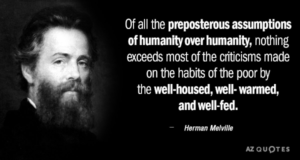
Of all the preposterous assumptions of humanity over humanity, nothing exceeds most of the criticism made on the habits of the poor by the well-housed, well-warmed, and well-fed.
-
-
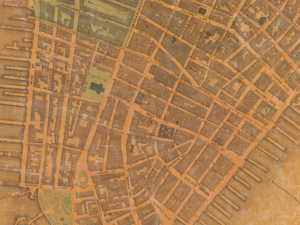
Excerpt from a map of lower Manhattan, at the time of the story.
-
-
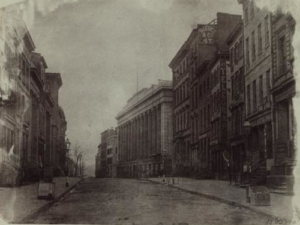
An early morning view of Wall Street, circa 1860.
-
-
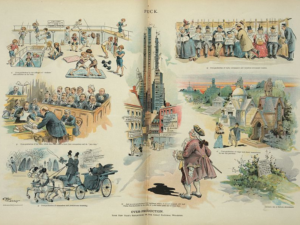
Print shows a vignette cartoon with Father Knickerbocker standing at center looking on in dismay at the site of a planned “49” story building near several other skyscrapers already under construction; the surrounding vignettes show an abundance of college athletes, excessive periods of mourning, a spate of frivolous lawsuits with juries that take “busy men” away their work, “over-production of trashy newspapers and voracious newspaper readers”, and overly ostentatious “mausoleums”.
-
-
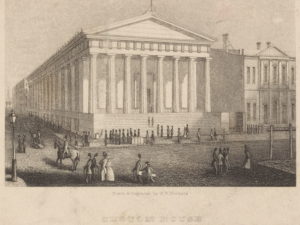
Custom House, circa 1850. [Now Federal Hall National Memorial]
-
-
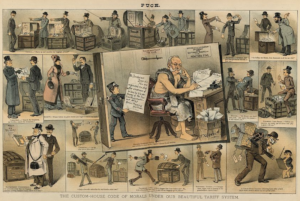
Illustration shows a vignette cartoon with William Dorsheimer seated at center in the “Office of the U.S. District Attorney and Editorial Rooms of the New York Star” where he receives a letter from “Daniel Manning Sec’y Treas.” asking him “to stop the acceptance of bribes by the employees of the Custom House, without delay”. The surrounding cartoons all show instances of Custom officials being offered bribes by travelers returning from abroad; including a “sketch by our special artist”, i.e., Puck, showing a custom official headed home, laden with merchandise in the form of bribes.
-
-
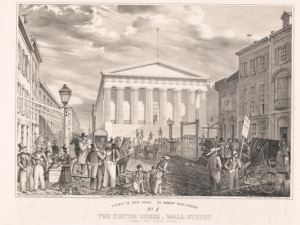
Views in New York by Robert Kerr, architect. No. 1, the Custom House, Wall Street viewed from Broad Street
-
-
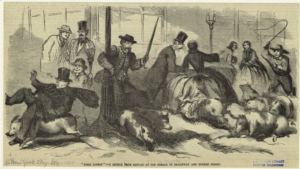
“Pork Lively” – A Sketch From Nature At The Corner Of Broadway And Fourth Street. Circa 1859.
-
-
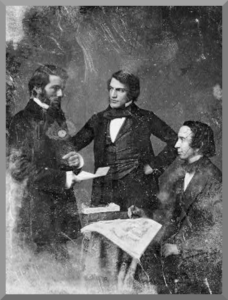
Three literary gentlemen
-
-
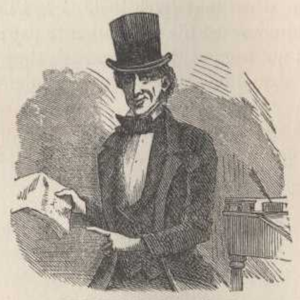
This panel was taken from Mark Twain’s novel “The Gilded Age: A Tale of Today”. The drawing is by Charles Warner. I enjoy the crooked smile and lupine cast of this gentleman’s face. I can imagine Nippers, meeting with a client, decked out in his best suit, looking to close a transaction.
-
-
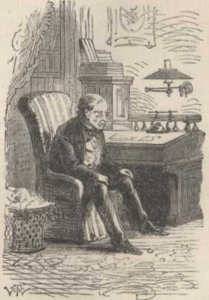
This panel was taken from Mark Twain’s novel “The Gilded Age: A Tale of Today”. The drawing is by Charles Warner. This is how I imagine our narrator, surrounded by books in a comfortable office mired in thought about what to do about his situation.
-
-
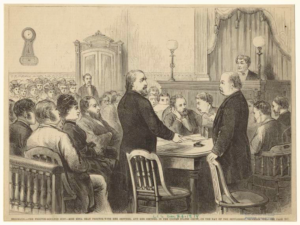
A courtroom scene from 1874.
-
-
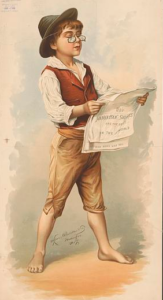
A romantic illustration of a newsboy from the era.
-
-
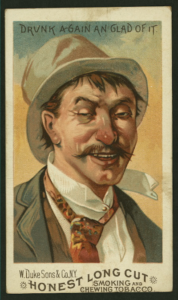
A comic character from a trading card. These cards were an early form of collectible advertising.
-
-
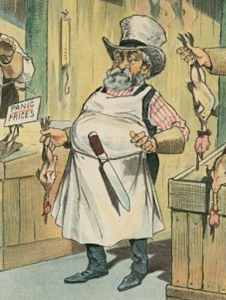
Excerpt from an 1895 political cartoon.
-
-
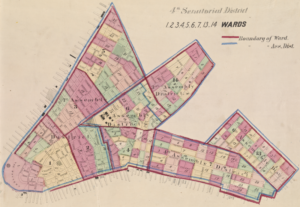
New York City Wards and Assembly Districts and also Senatorial Districts 1885.
-
-
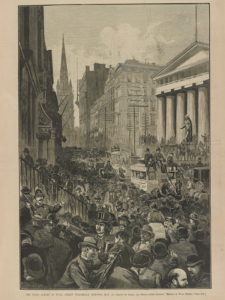
Wall Street When The Market Melts. Illus. in: Harper’s Weekly, v. 28, no. 1431 (1884 May 24), p. 333.
-
-
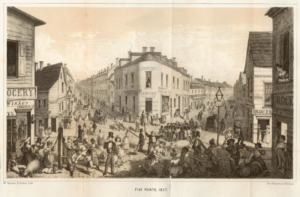
A scene from the Five Points neighborhood; note the large swine in the lower-left corner.
-
-
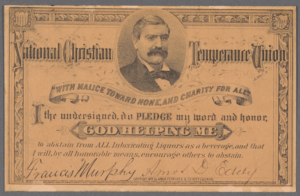
Printed pledge card of the National Christian Temperance Union, circa 1887
-
-
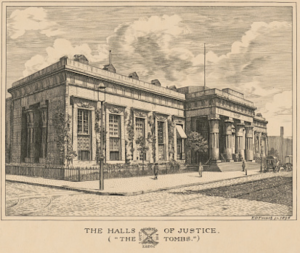
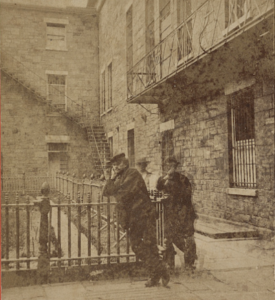
This 1896 print shows the prison, known as “the Tombs”. It was built 1835-1840 and located at Centre, Elm, Franklin, and Leonard Streets, in New York City. It was replaced in 1902 with a larger structure, which was eventually torn down and the land converted to a park.
-
-
Excerpt from a stereograph card, created between 1890 and 1900, which shows the interior of the notorious prison.
-
-
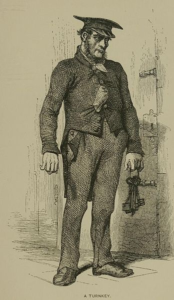
Hopkins, Tighe. “The Dungeons of Old Paris”, 1897.
-
-
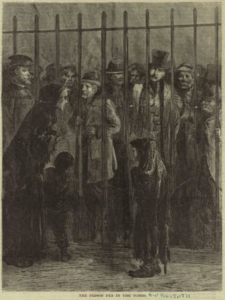
The Prison Pen In The Tombs, circa 1871.
-
-
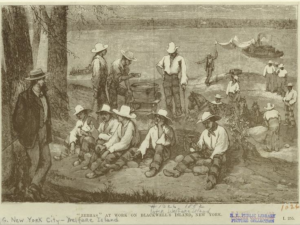
“Zebras” At Work On Blackwell’s Island, New York. The term Zebra spoke to the black-and-white striped pants prisoners wore.
-
-
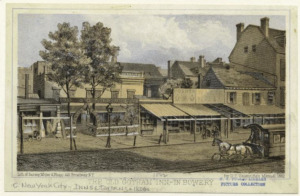
The exterior of the Old Gotham Inn on the Bowery, circa 1862.
-
-
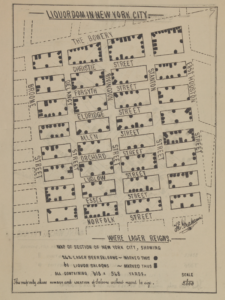
An 1883 map of the saloons in one section of the lower east side of Manhattan.
-
-
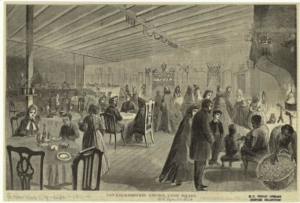
The Knickerbocker Kitchen, Union Square. Circa 1864
-
-
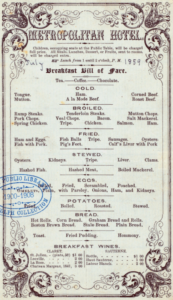
1959 Breakfast Menu from the Metropolitan Hotel in NYC.

